
























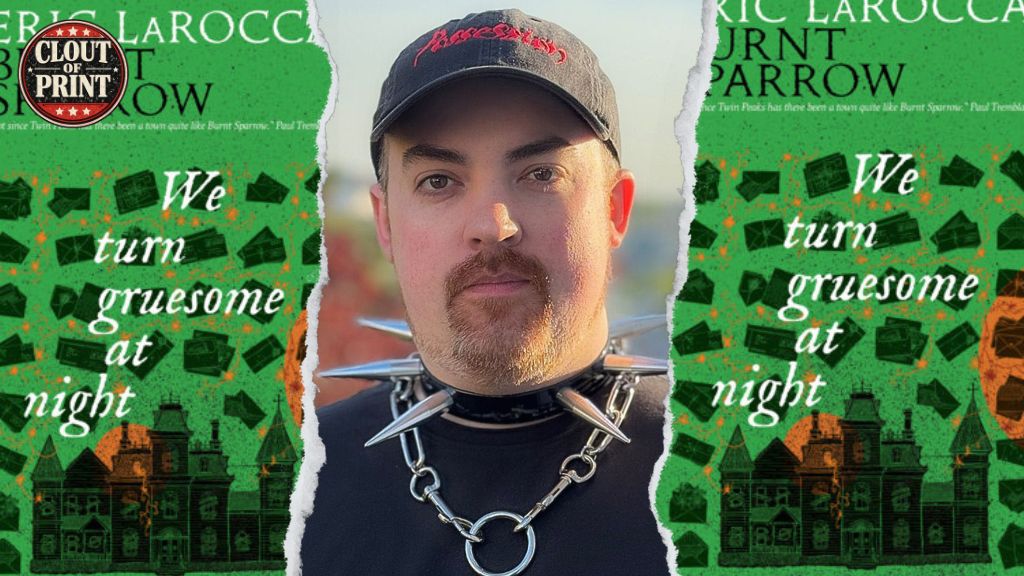
Anyone who’s read Eric LaRocca is well aware of their unique gift for conjuring visceral nightmares with the elegance of a poet. A Bram Stoker Award® finalist, Shirley Jackson Award nominee, and Splatterpunk Award winner, they have carved a distinct place for themselves in the world of horror, building a body of work that navigates effortlessly between the grotesque and the deeply human.
With their latest release, We Turn Gruesome At Night, the second installment in the Burnt Sparrow trilogy, LaRocca returns to the scarred New England town ten years after the devastating Christmas morning massacre that forever changed it. While the community continues to struggle beneath the weight of its past, Rupert Cromwell and Gladys Esherwood remain trapped within the suffocating confines of End House, their existence defined by an unbearable and seemingly endless monotony. But when a town courier named Pierce arrives with news of a secret organisation known as The Perdido Society, Rupert soon finds himself drawn into an intricate and increasingly sinister web of secrets, transgressions and temptation—one that threatens to expose just how much darkness has continued to fester beneath Burnt Sparrow’s surface.
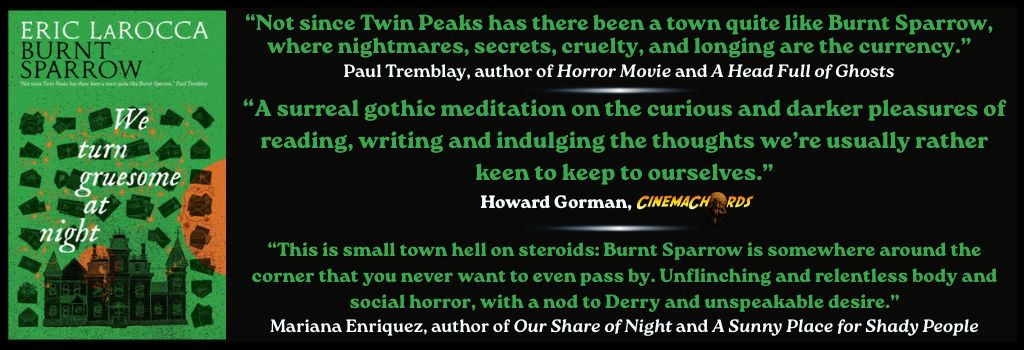
We Turn Gruesome At Night is a surreal, unsettling meditation on why people write, and whether putting our darkest thoughts on the page can really purge them—or simply give them somewhere to grow. LaRocca deftly navigates the forbidden pleasures of reading and writing, while its curious collision of contemporary times and Victorian gothic atmosphere makes for a deliciously disorienting descent into darkness, desire and the importance of resisting the urge to judge what we don’t understand.
To celebrate the book’s release today (September 8th), CinemaChords once again sat down with LaRocca to discuss the next chapter in the Burnt Sparrow saga, how writing serves as a means of confronting anxiety and dark thoughts, the provocative notion of liberation through destruction, the elusive possibility of absolution, and the importance of resisting the instinct to judge those whose thoughts, desires or identities might make others uncomfortable.
 Buy from Forbidden Planet