












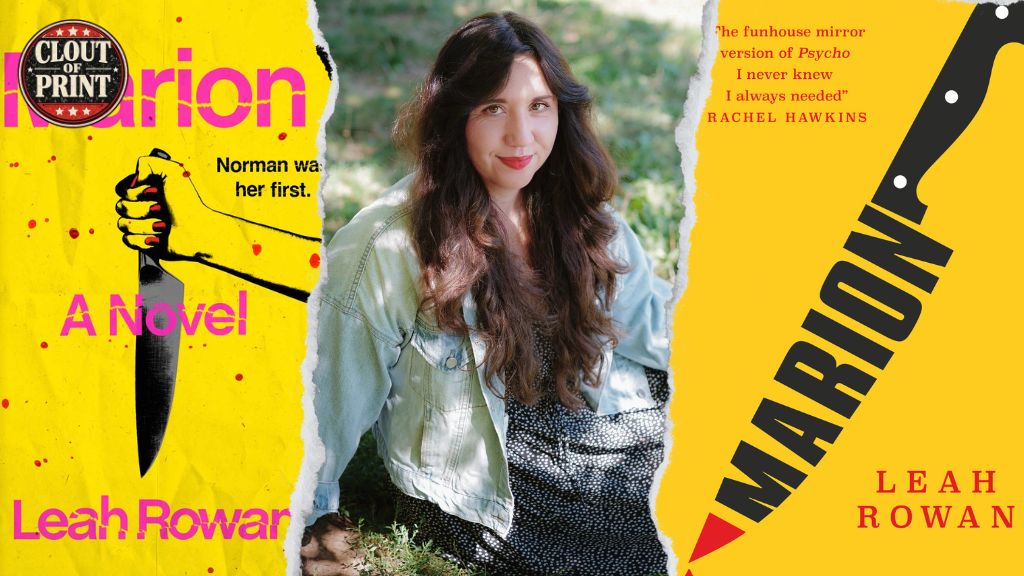
What happens when one of fiction’s most famous victims gets to tell her own story? Author Leah Rowan’s debut novel Marion arrives this week in the US and on July 7 in the UK, reimagining one of the genre’s most enduring stories. Taking Robert Bloch’s Psycho as its starting point, the novel recasts its central victim as a resourceful and morally complex protagonist whose story resists the certainties of the original.
Brimming with suspense and high-stakes tension, Marion echoes the moral and narrative instability of 1959’s Psycho, keeping readers uncertain about where their sympathies should lie.
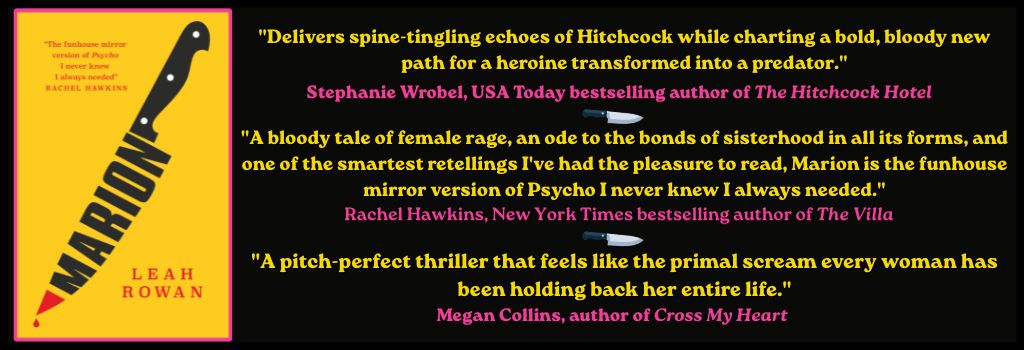
After stealing money to help her sister escape an abusive marriage, Marion finds herself stranded at a remote inn, where she kills a threatening innkeeper in self-defence. Now on the run as both thief and killer, she must navigate mounting dangers while uncovering dark secrets in a bid to protect both herself and her sister.
Ahead of the book’s publication, CinemaChords sat down with Rowan to discuss taking on a story as culturally entrenched as Psycho, finding space for her own voice in its shadow, the competing visions of womanhood embodied by the novel’s maternal figures, and the role fear plays in shaping the boundaries of a woman’s freedom.

JOIN US ON SOCIALS