





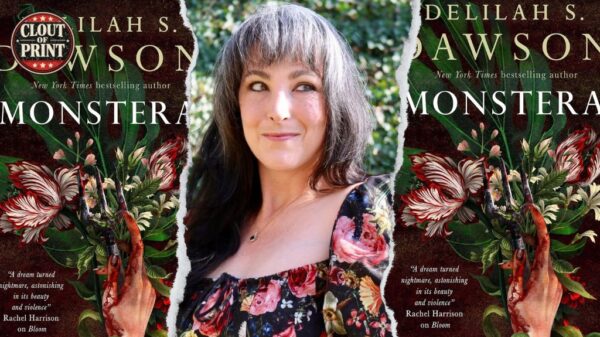












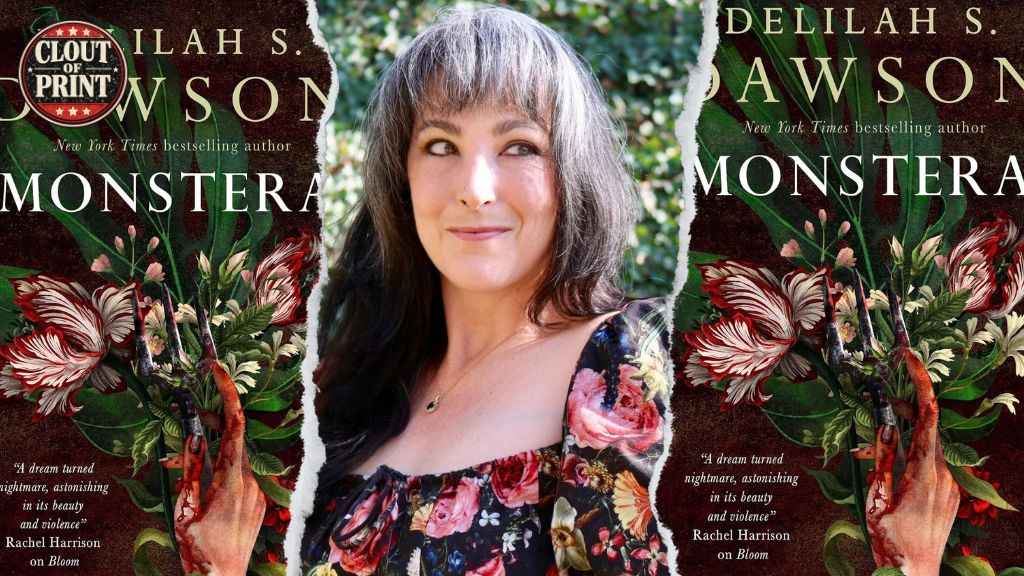
Plants are meant to make a house feel more like a home, yet in Delilah S. Dawson’s Monstera, their presence is rather less reassuring.
A New York Times and USA Today bestselling author and Stoker Award winner, Dawson has published more than 40 books across a range of genres, alongside dozens of comics and short stories. With her latest novel, Monstera, she turns the prospect of a fresh start into fertile ground for botanical and body horror, exploring what happens when desire takes root and the urge to flourish gives way to an unexpected pernicious propagation.
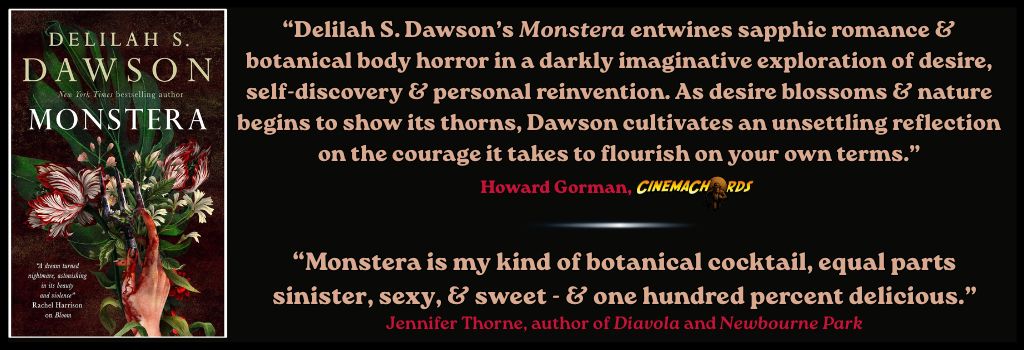
The novel follows 24-year-old Lucy McClintock, who escapes the control of her overbearing grandfather to start afresh in a dreamy Victorian house in Savannah. There, she finds herself fascinated by Saskia, her strong, secretive downstairs neighbour, whose apartment is a verdant jungle of plants and artwork. But as their attraction grows, Lucy quickly realizes that both women share more than she could have imagined — and that beneath the promise of new beginnings, something sinister is pushing through.
 ADD TO GOODREADS
To celebrate today’s release of Monstera, CinemaChords sat down with Dawson to discuss blending sapphic romance with botanical body horror, flipping traditional coming-of-age story tropes on their head, and why plants make such unsettling horror material when they’re perfectly capable of getting on with things without us.