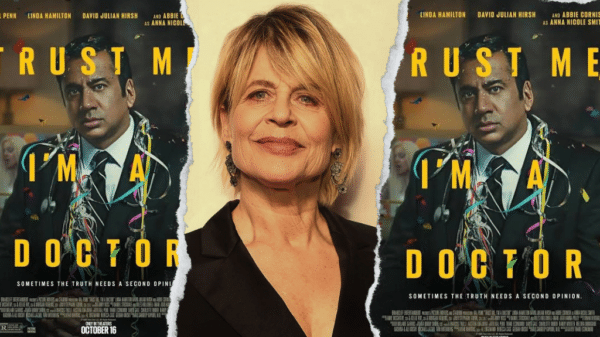


























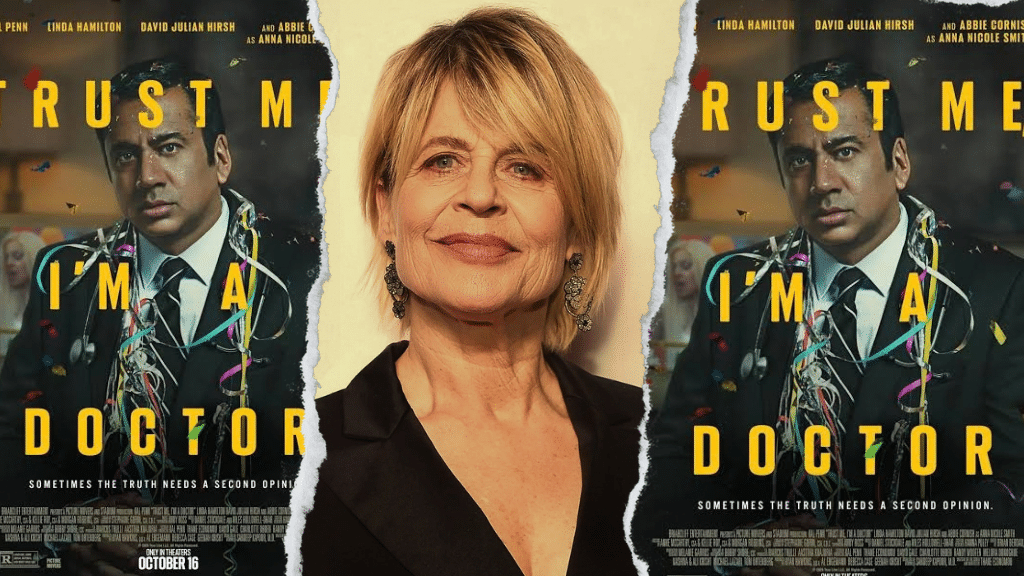
Linda Hamilton has spent much of her career playing women who are difficult to intimidate. In Trust Me, I’m a Doctor, however, there are no killer machines to outrun or apocalyptic futures to prevent. Instead, Hamilton plays defence attorney Ellyn Garofalo, a woman whose greatest weapons are her composure, intelligence and apparently limitless ability to remain unfazed while everything around her spirals into utter mayhem.
The film follows Dr. Sandeep Kapoor (Kal Penn) after he becomes implicated in the death of his former patient, model and reality television star Anna Nicole Smith (Abbie Cornish). With the early 2000s tabloid machine in full flight, paparazzi descend on Kapoor’s office, police raid his home and private journals are leaked, turning his personal life into a public spectacle.
Based on Kapoor’s memoir, the film charts his fight to clear his name as he faces a high-stakes drug conspiracy trial, guided by Attorney Ellyn Garofalo through the increasingly bizarre collision of celebrity, justice, politics and personal redemption.
Hamilton brings a wonderfully deadpan edge to the role, but there is considerably more going on beneath Ellyn’s unflappable exterior. Her humour provides some of the film’s lighter moments without diminishing the seriousness of Kapoor’s predicament, while Hamilton’s restrained performance allows the character’s empathy and determination to emerge without ever tipping into courtroom grandstanding.
There is, inevitably, something pleasingly familiar about watching Hamilton play another formidable woman who can walk into a room and take control of the situation. But where the likes of Sarah Connor relied on instinct, physicality and sheer survival instinct, Ellyn Garofalo fights her battles with questions, evidence and the occasional perfectly timed gesture or look.
To celebrate the release of the film this coming October 16th, CinemaChords sat down with Hamilton to discuss finding comedy and satire in a story rooted in real-life tragedy, playing a lawyer whose strength comes from knowing when to speak — and when not to — and the responsibility of portraying events drawn from Kapoor’s own experience.