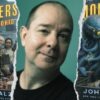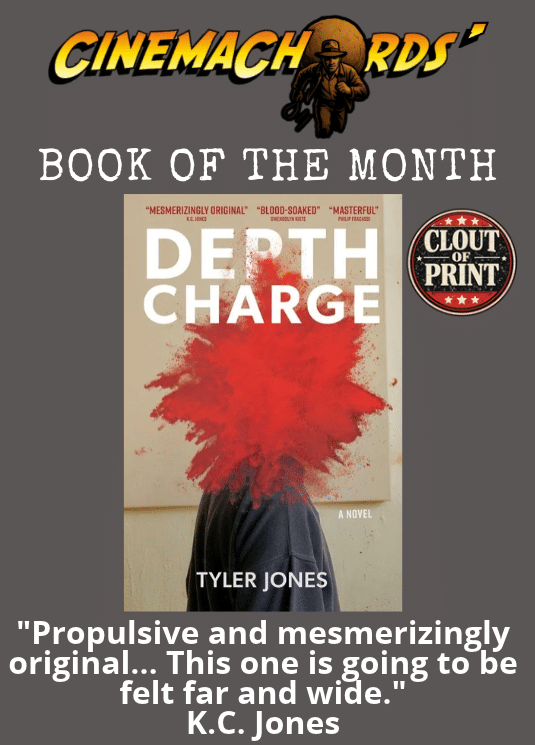



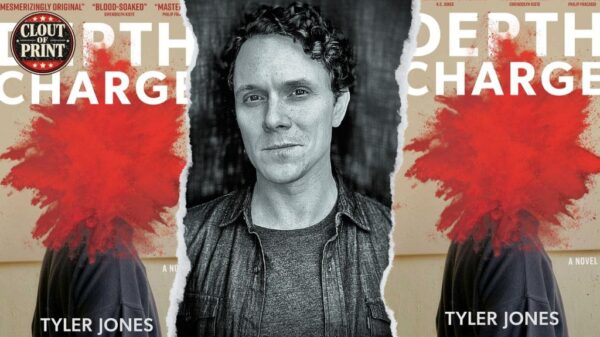










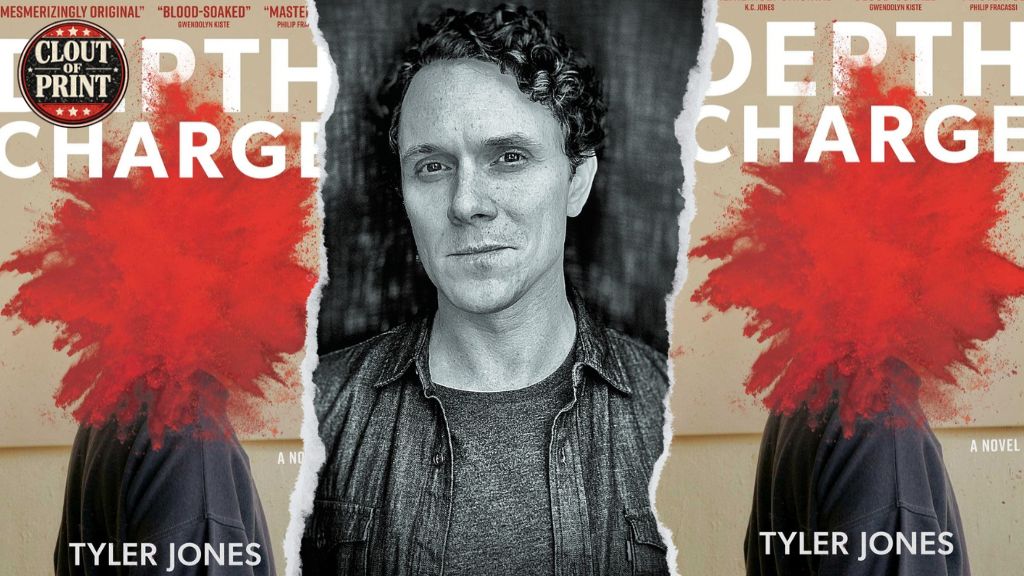
What if the future wasn’t something you could predict, but something you could actually see? And what if those visions didn’t come in dreams or premonitions, but in your own blood? That’s the sui generis premise behind Depth Charge, the latest novel from Tyler Jones, author of Burn the Plans (named one of Esquire‘s Best Horror Books of 2022), Heavy Oceans and Midas.
The story follows Julian, a bullied and isolated schoolboy whose ability to see visions of death in his blood is discovered by the one person willing to befriend him. Years later, Julian has become a celebrated artist, but his extraordinary gift draws his old friend Marcy and her son into a dangerous world of secret government programmes, murder and a future that seems increasingly impossible to escape.
There’s a profound sadness running through Jones’s latest work, a novel that dissects death, destiny and the things we take for granted until they’re gone. The book’s protagonist Julian’s ability to glimpse the future through his own blood gives Jones a fascinating and enigmatic supernatural framework through which to explore the limits of free will and the possibility that some endings are simply unavoidable. As past, present and future become increasingly entangled as the story progresses, the question is not so much whether we can change our fate as how we choose to live with the knowledge of it.
Bleak, unsettling and frequently heartbreaking, it’s also a novel that finds unexpected warmth in life’s small pleasures and fleeting human connections. Jones makes a compelling case for paying attention to the ordinary, because those are, more often than not, the moments that turn out to matter most.
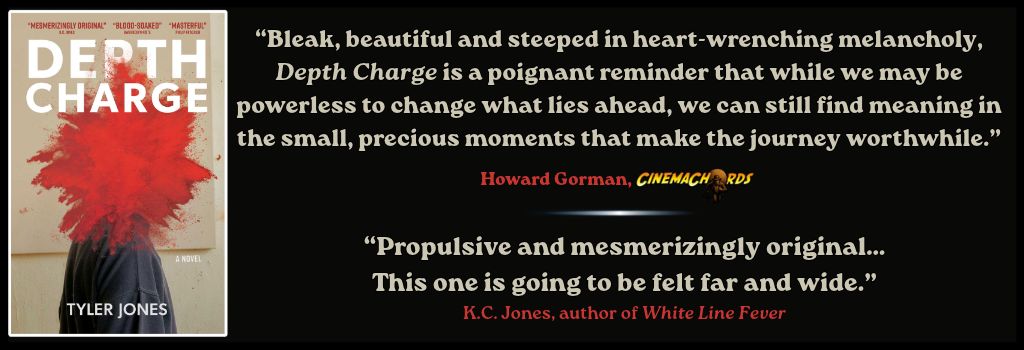
To mark the book’s release (November 10), CinemaChords caught up with Jones to discover the genesis of Depth Charge, the significance of its title and the challenge of constructing a story in which past, present and future are inextricably linked. We also discuss the importance of seemingly insignificant moments, the relationship between art and the things we struggle to comprehend, and some of the novel’s loftier philosophical questions: whether knowing our own fate would change the way we live, how much control we really have over the future, and why learning to navigate endings might be one of life’s most important lessons, even if it’s one we’re reluctant to confront.
 ADD TO GOODREADS