















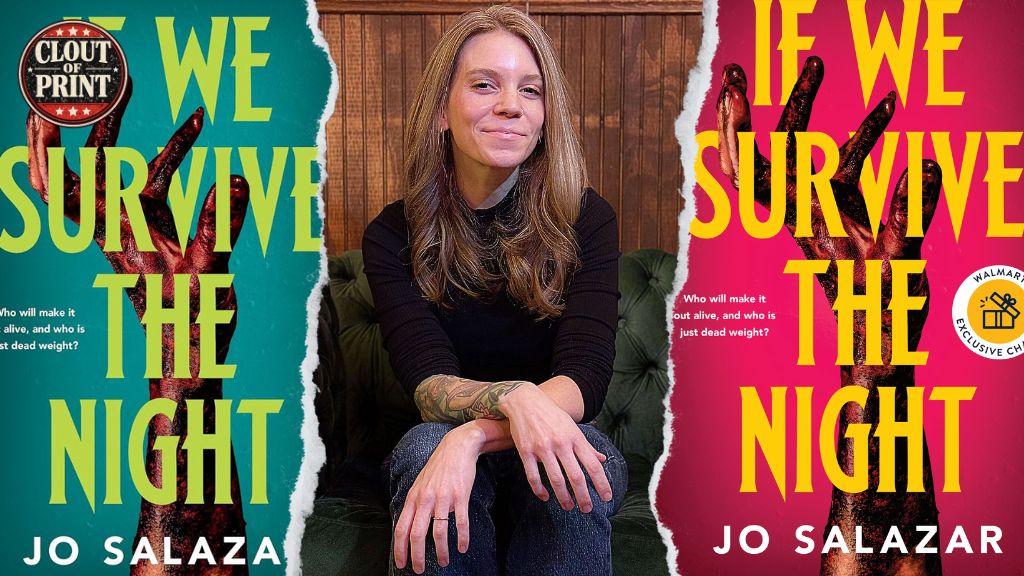
What happens to the human psyche when the world as we know it comes to an end? For Jo Salazar, the apocalypse isn’t so much about the undead as it is about what their arrival triggers in the living: the instincts, fears and compromises that manifest when survival becomes the only rule.
Combining the survival horror of “The Last of Us” with the interpersonal tension of “Yellowjackets,” If We Survive the Night, the first book in a new trilogy, centers on sixteen-year-old Quinn who witnesses the beginning of the apocalypse from the roof of the residential treatment centre where she is undergoing therapy. As those dubbed “carriers” start infiltrating the facility, Quinn and her best friend Keisha attempt to escape – but their fight for survival quickly becomes just as much about trust, fear and sacrifice as it is about outrunning the infected.
What sets Salazar’s novel apart in such a crowded sub-genre is its fascination with the psychology of collapse. The zombies may provide the immediate threat, but If We Survive the Night is ultimately less interested in the mechanics of the apocalypse than in what happens when the structures that have shaped our lives fall away – and whether the qualities that mark someone as an outsider in the old world might prove to be precisely what helps them survive the new one.
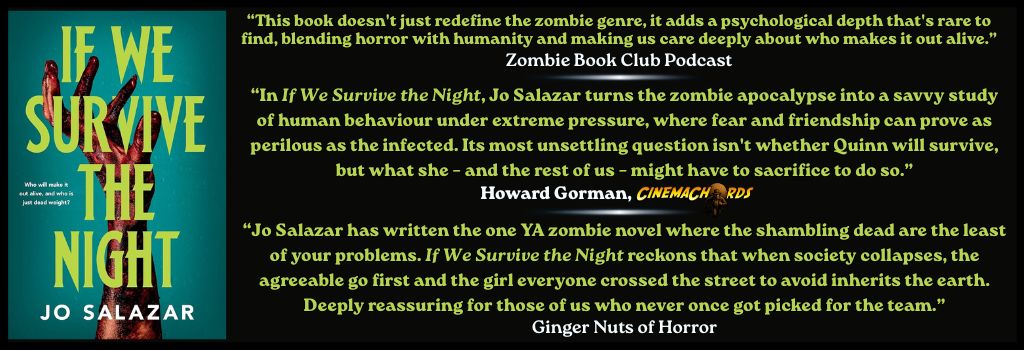
Quinn has spent much of her life being told that something about her isn’t quite right. But, as society starts falling apart around her, she begins to realize that she might actually be uniquely equipped for the “new” world. However, survival comes with its own moral compromises – and the novel questions how much of ourselves we are willing to sacrifice to stay alive.
To mark the book’s publication, CinemaChords’ Howard Gorman sat down with Salazar to discuss turning the familiar zombie apocalypse into something altogether more psychological – a story less concerned with the mechanics of the undead than with friendship, trauma and the complexities of trying to remain as human as possible when everything else has fallen apart.
 Buy from Barnes & Noble