





“These days, nobody seems to care about the experience, they just expect everyone else’s time for doing absolutely fucking nothing.”
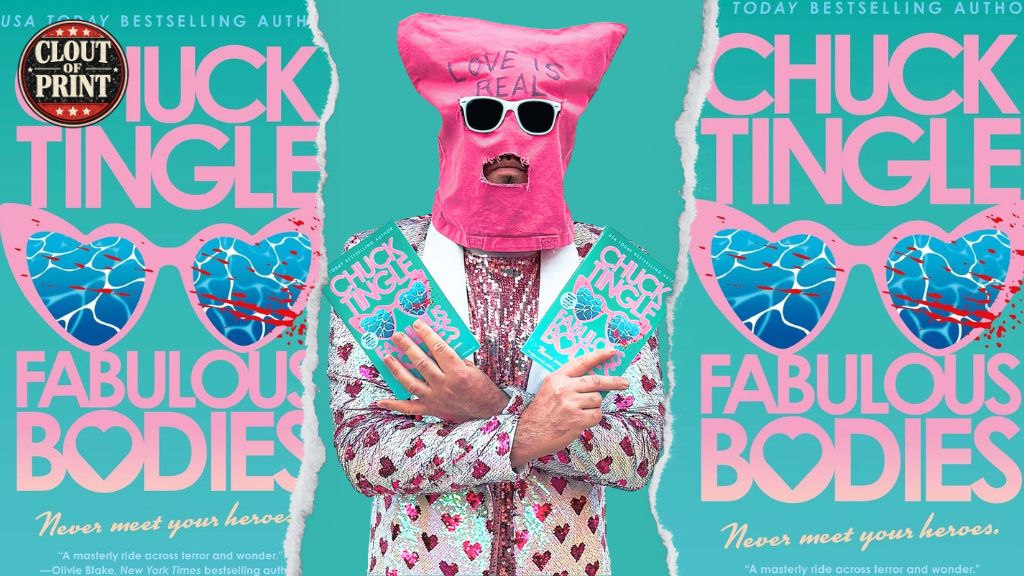
So declares one of the key characters in Fabulous Bodies, the highly anticipated new novel from USA Today bestselling author Chuck Tingle. It’s a line that hits shockingly close to the bone, perfectly encapsulating a book that’s bound to become a major topic of discussion when it publishes this coming July 7th through Titan Books in the UK and Tor Nightfire in the US.
For us, Fabulous Bodies is a brilliantly bonkers, genre-fluid chiller that reads like a late-night ’80s midnight movie for the online age. Melding the close-quarters, adrenaline-inducing stakes of Michael Mann’s Collateral with the cult sci-fi schlock of The Hidden, the novel drags an initially detestable delinquent into the orbit of a sinister, charismatic figure.
Yet, beneath its trippy, B-movie exterior, you will find a fiercely sharp critique of influencer culture and our insatiable appetite for shock value, exposing a modern narcissism that rewards increasingly extreme behaviour for fleeting attention.
The result is a wildly entertaining but deeply resonant critique that ultimately forces readers to reckon with whether great art can ever truly excuse destructive impulses.
The novel charts the misadventures of Poppy Stringer, an aspiring fashion influencer by day who moonlights as a Palm Springs grave robber by night to make ends meet. When her ultimate idol – the flamboyant, piano-slamming rock icon Eddie Michaels – unexpectedly dies, Poppy is offered a lucrative payday to snatch his corpse from the medical examiner. What should be a straightforward final score quickly turns into absolute, unadulterated chaos when the deceased rock star suddenly wakes up, triggering a fabulously blood-soaked joyride of pure grindhouse cinematic carnage.
In anticipation of the book’s release, we caught up with Tingle to discuss how he merged this contemporary satire on fame and performance with the raw energy of an ’80s midnight movie. The author also opened up about using “America’s iconic answer to Elton John” to interrogate the sinister side of creative genius, and just how much the narrative was informed by his own experiences navigating the surreal reality of meeting personal heroes.
 Buy from Bookshop
Buy from Amazon
Buy from Blackwell’s
Buy from Waterstones
Buy from Forbidden Planet
Buy from Bookshop
Buy from Amazon
Buy from Blackwell’s
Buy from Waterstones
Buy from Forbidden Planet