














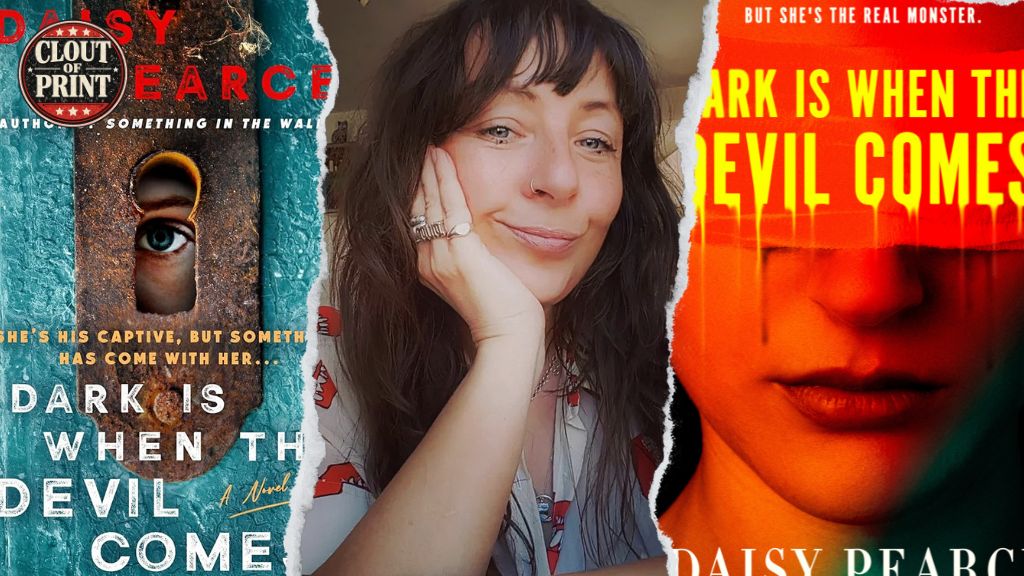
There is something very particular about the topographical terror that Daisy Pearce captures so vividly in the British genre space today. If her early career – stretching from the formative fear of reading Stephen King’s Cujo and The Hamlyn Book of Horror at a rather impressionable age to her award-winning work in The Silence — teaches us anything, it’s that going back to our roots seldom brings back pleasant memories, but rather digs up local lore, prompting characters to start scratching away at old scars, reopening wounds they’d convinced themselves had long since healed.
Pearce started writing short stories as a teenager, with her first published piece, The Black Prince, appearing in One Eye Grey magazine. Her story The Silence won a bursary with The Literary Consultancy in 2015, while The Brook Witch was later performed on stage at the Small Story Cabaret in Lewes. Her debut novels The Silence and The Missing were published in 2020, followed by Something In The Walls in 2025.
In her latest novel, Dark Is When the Devil Comes, publishing tomorrow (April 28), Pearce doubles down on eerie rural horror, once again imaginatively upending a whole clutch of familiar genre tropes.
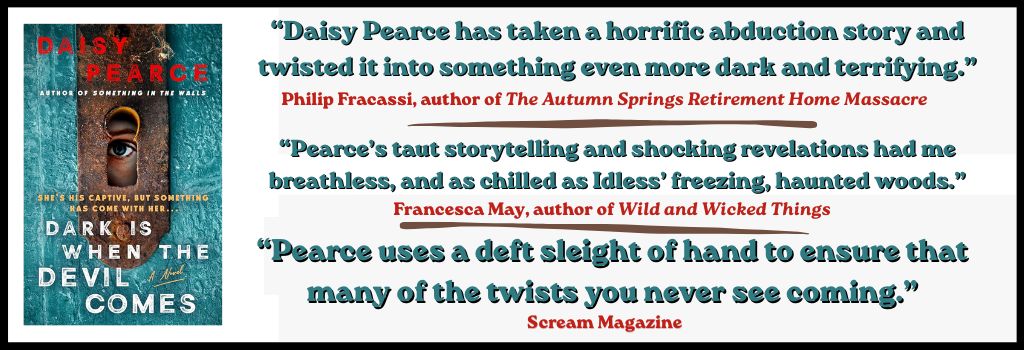
The story follows Hazel, who returns to her childhood home of Idless following a difficult divorce, hoping to salvage her sense of self. But what starts as an attempt to bury the hatchet with her estranged sister, Cathy, quickly derails when Hazel goes missing just before their planned reunion.
Hazel’s disappearance triggers the town’s repressed anxieties, reopening old wounds in a community hemmed in by the restless surrounding woodlands and a collective superstitious anxiety. As Cathy is drawn into the search, she is forced to confront the local lore, and in doing so, proves the old adage that those who go looking for trouble are seldom equipped for what they end up finding.
To celebrate the release of Dark Is When the Devil Comes, CinemaChords spoke with Pearce about the book’s central themes, its informed and vivid setting, and the somewhat paradoxical appeal of horror, particularly for those living with anxiety who often find comfort in its controlled form of dread. We also talked about how the book cleverly combines kidnapping thriller conventions with supernatural tropes, all while remaining firmly rooted in relatable characters to ensure that the more fantastical aspects draw the reader deeper into the story rather than pushing them away.
Secure Your Copy of DARK IS WHEN THE DEVIL COMES via the Retailers Below:

JOIN US ON SOCIALS