















Australian filmmaker Daniel J. Philips’ Diabolic arrived with a degree of festival momentum, playing to receptive audiences at last year’s Adelaide Film Festival and earning an additional screening. A possession-horror rooted in religious extremism and psychological collapse, the film aims for sustained unease rather than overt shocks, favouring atmosphere and careful pacing; an approach that proves effective in parts, but ultimately limiting.
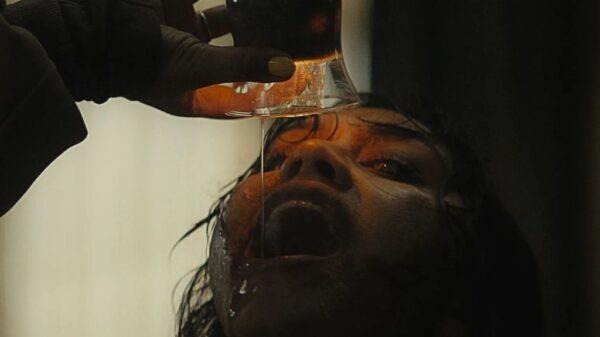
There’s no gentle throat-clearing with Diabolic. Philips opens with a disturbing baptism involving a group of fundamentalist Mormons — an arresting prologue that immediately signals grim intent. Elise (Elizabeth Cullen) is forced beneath the water as the name Larue is spoken aloud, a word that lands with the weight of a curse. Then come the images that really stick with you: horrifying, ghostly fingers pressing against her lips and into her mouth, followed by a thick black sludge pouring out of her like something dragged up from deep inside. It’s a striking, well-judged prologue that promises something truly nasty this way comes.
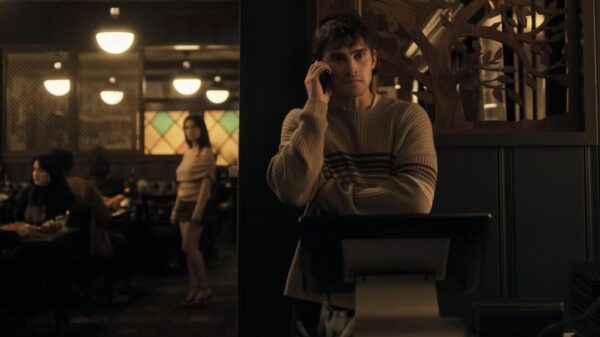
Several years later, Elise is living in excommunication with her boyfriend, cut off from her faith but clearly still marked by it. Plagued by blackouts and missing time, her grip on reality seems to be loosening. Desperate for clarity, she returns to the so-called “baptism house”, the place where everything first went wrong, in the hope of uncovering the truth behind her deteriorating mental state. At the centre of it all is Cullen, who sells Elise’s unravelling with a rawness that just about keeps you invested even as the story starts treading familiar possession-horror ground. She’s ably supported by a solid cast who, accents-wise, pass convincingly as American — if you didn’t know this was an Australian production, you’d never guess from the performances alone.
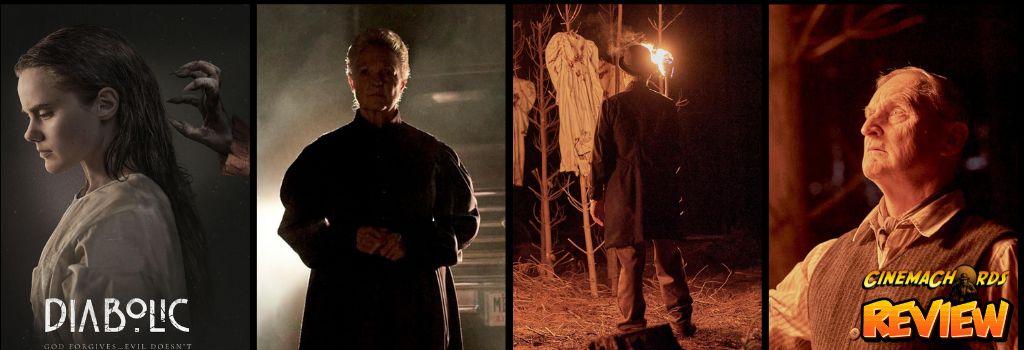
The film’s central issue is pacing. Philips allows the story to simmer for too long, and when the horror does eventually escalate, it feels well overdue. What should be a ferocious third act is undeniably welcome, but it’s an all-too-brief escalation, and the film never quite capitalizes on the genuinely disturbing promise of its opening reel. There are flashes of something bolder and darker, but they arrive late and leave too quickly.
For Australian audiences, Diabolic benefits from its festival exposure and a degree of assured craftsmanship. But, for a wider international audience, it lands as a competent but middling entry in the possession-horror canon: well-acted, moody, and occasionally unsettling, but ultimately too restrained for its own good. You’ll remember that opening baptism and wonder why the film, having taken the plunge so early on, spends so much time keeping its head safely above water.
VERDICT:

Brainstorm Media will release Diabolic in select theaters on February 13 and on-demand February 20.